After contract signing, the operational project phase begins. The project manager assumes responsibility for implementing the project in accordance with contractual agreements.
They monitor schedules, costs, and scope of work, ensure compliance with agreed quality standards, and manage the project through to successful acceptance by the client or the relevant regulatory authority.
Successful pharmaceutical projects require precise planning, strict compliance with regulatory requirements, and close coordination of all stakeholders. Our project management ensures that complex tasks—from planning through implementation to regulatory approval—are realized efficiently, on schedule, and cost-effectively. With extensive experience in GMP-regulated environments and a clearly structured project approach, we assume overall coordination, ensure quality and compliance, and guide your project safely to success—from the concept phase through turnkey realization and qualification to successful handover to the client.
Fields


Establishment of a project-specific organization with clear responsibilities
A specific project organization is created for efficient execution.
Roles, responsibilities, and communication channels are defined—both internally (project team, specialist departments) and externally (subcontractors, consultants, regulatory authorities).
The goal is clear distribution of responsibilities to accelerate decision-making processes and avoid misunderstandings.

Overall coordination and management of the project team and all involved trades, subcontractors, consultants, and internal and external interfaces
The project manager coordinates all stakeholders, manages their contributions, and ensures smooth collaboration.
They plan interfaces, organize coordination meetings, and ensure that information flows in a timely and complete manner.
This ensures that all trades and partners work toward common project objectives.
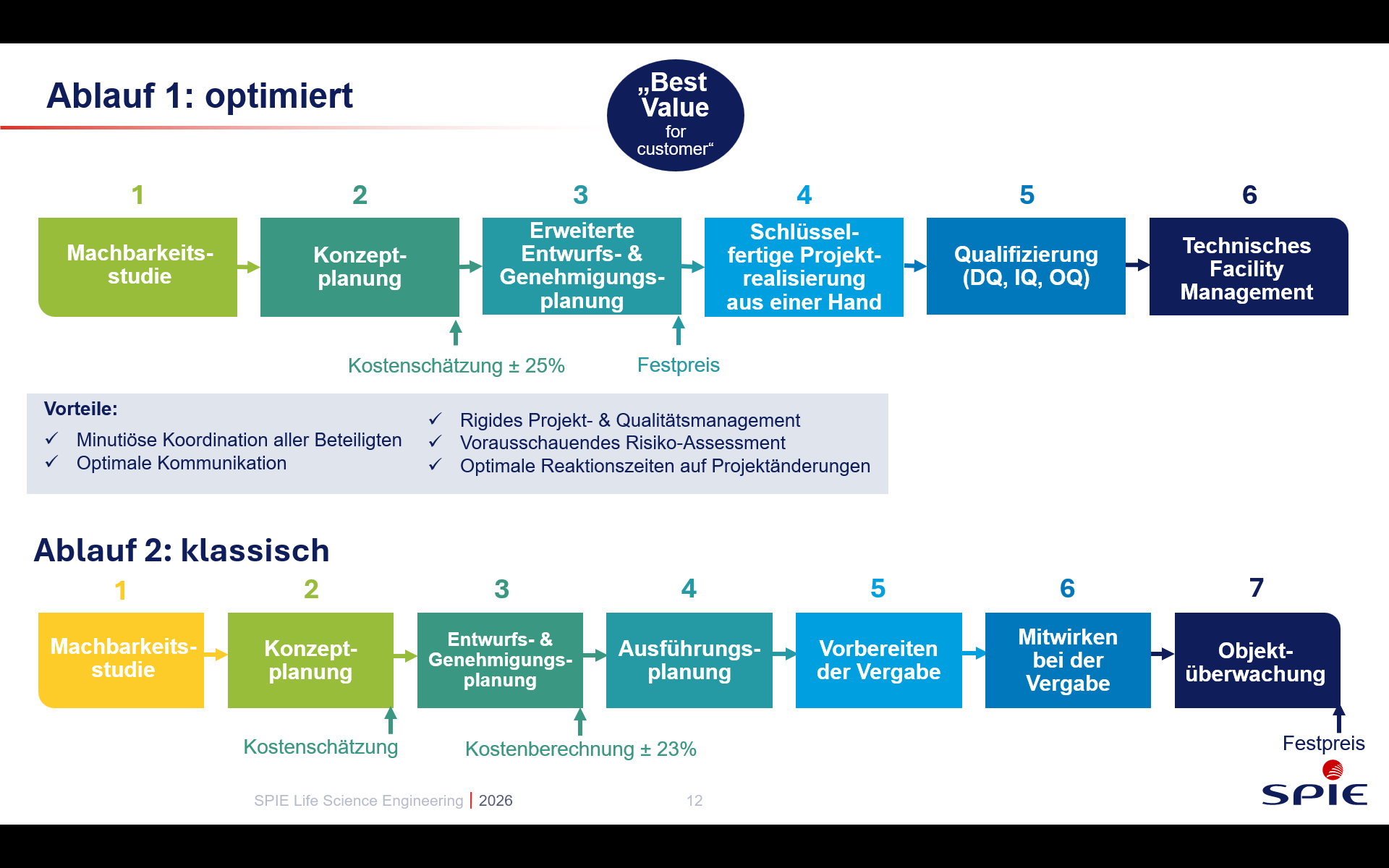
Creation/updating and monitoring of project schedules
A detailed schedule (e.g., Gantt or bar chart) represents the temporal structure of the project.
The project manager creates this plan, updates it regularly, and monitors progress.
Through variance analysis, delays can be identified early and countermeasures initiated.

Primary point of contact for the client, regular coordination with all specialist planners, subcontractors, etc.
The project manager is the central communication and coordination hub.
They represent the project externally to the client and serve as the primary point of contact.
They also ensure regular coordination with all project stakeholders to maintain transparency, trust, and continuous information flow.

Continuous project reporting/cost controlling
Ongoing reporting on project status, cost development, and risks is essential.
Reports, planned-versus-actual comparisons, and key performance indicators are prepared to make project progress measurable.
Cost controlling serves to maintain the budget and enables timely corrections in case of deviations.

Ensuring adherence to schedule and budget, quality standards, and legal requirements
The project manager monitors compliance with all relevant framework conditions.
In addition to schedule and cost control, particular attention is paid to the quality of deliverables and fulfillment of legal requirements (e.g., construction, environmental, or occupational safety regulations).
This ensures a technically, economically, and legally sound project outcome.

Risk management and conflict resolution
Potential risks are identified early, assessed, and managed with appropriate measures.
The project manager acts proactively to prevent or mitigate problems.
In case of conflicts between stakeholders, they mediate objectively and solution-oriented to prevent project delays.

Post-project review and lessons learned for continuous improvement
After project completion, a systematic evaluation is conducted: What went well, what can be improved?
These insights are documented and serve to optimize future projects.
The goal is continuous improvement of processes, methods, and collaboration within the organization.
References
Expansion of Plant III (HERMES PHARMA Ges.m.b.H.)
Expansion of Plant III with a 4-story extension + basement + technical center for office and laboratory areas as well as the expansion of the fully automated high-bay warehouse – GFA 6,440 m²
- Revision of the extended design planning for all trades
- Turnkey realization of the project
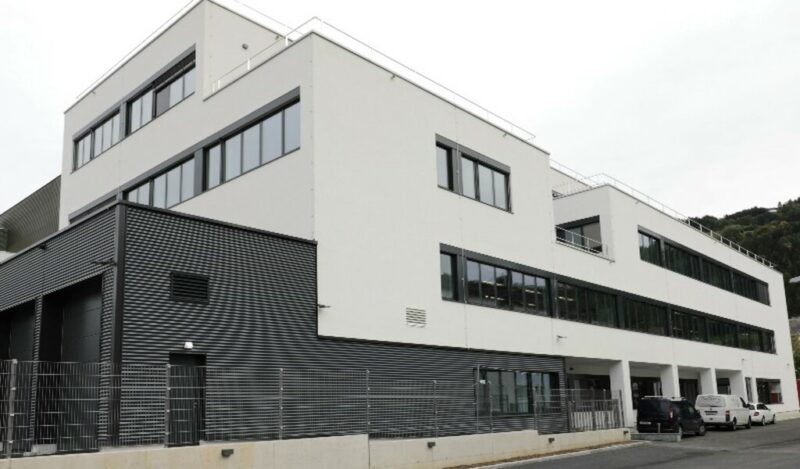
Project MOVE / Realization of R Laboratories 3rd and 4th Floor (Kulzer GmbH)
Consolidation of all research and development laboratories (2,000 m²) from the Wehrheim site to Kulzer GmbH’s headquarters in Hanau, into an existing, gutted industrial building. Extended design and approval planning, as well as the turnkey realization of the trades.
- Laboratory Furniture
- Climate-Controlled Rooms
- Ultrapure Media
- Ventilation
- Electrical
- Utilities
- MSR
- Steel Construction and Interior Fit-out